
All the Small (But Surprisingly Effective) Hacks to Prevent Tooth Decay
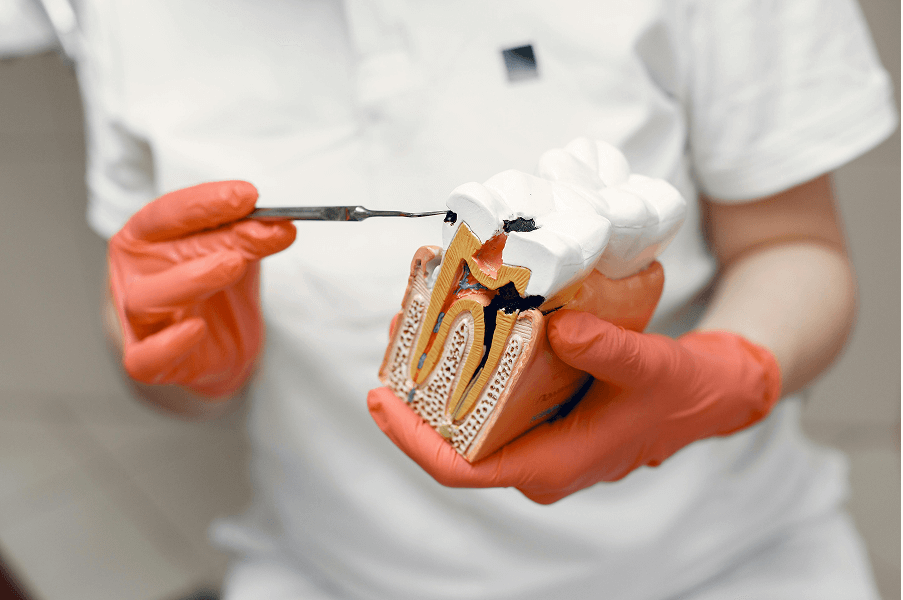
A doctor in orange nitrile gloves uses a dental tool to point out decay on a wooden replica of a tooth sliced to see the parts that make it up.
Most cavities don’t happen because someone ignores their teeth.
They happen because of tiny, everyday habits that don’t seem like a big deal—until they add up. The good news is that preventing tooth decay usually doesn’t require drastic changes. A few small tweaks can make a real difference over time.
Here are some simple, realistic ways to protect your teeth and lower your risk of cavities.
Brush Smarter, Not Harder
Brushing twice a day is important, but how you brush matters just as much as how often.
Use gentle pressure and small circular motions, paying attention to the gumline and the back teeth where plaque tends to hide. Brushing harder doesn’t clean better—it can actually wear down enamel and irritate gums.
Two minutes can feel longer than it sounds. If you’re not sure you’re hitting the mark, a timer or electric toothbrush can help.
Don’t Skip Flossing (But Do It Right)
Flossing reaches areas your toothbrush can’t. Plaque between teeth is a common place for cavities to start.
Instead of snapping floss straight down, gently curve it around each tooth and slide it below the gumline. Once a day is enough to make a difference. Consistency matters more than technique perfection.
If traditional floss is a struggle, floss picks or water flossers are better than skipping it entirely.
Rinse When You Can’t Brush
Brushing isn’t always possible after every meal—and that’s okay.
Rinsing your mouth with water helps wash away food particles and reduce acid buildup. This is especially helpful after sugary or acidic foods and drinks.
If you’ve had something acidic, it’s usually better to rinse and wait before brushing rather than brushing right away.
Watch How Often You Snack
It’s not just sugar that causes cavities—it’s how often your teeth are exposed to it.
Frequent snacking and sipping give bacteria more chances to produce acid. Even “healthy” snacks can contribute if they’re eaten constantly throughout the day.
Giving your teeth breaks between meals helps your mouth recover and lowers cavity risk.
Be Mindful of Sugary and Acidic Drinks
Soda, juice, sports drinks, and even sparkling water can be tough on enamel, especially when sipped slowly over time.
Drinking these with meals instead of throughout the day, using a straw, and following up with water can help reduce their impact on your teeth.
Pay Attention to Dry Mouth
Saliva plays a big role in protecting your teeth by neutralizing acids and washing away bacteria.
If your mouth often feels dry (especially due to medications) staying hydrated, chewing sugar-free gum, or talking with your dentist about solutions can help protect your enamel.
Small Changes That Help Kids Avoid Cavities
Children are especially prone to tooth decay, but small habits make a big difference.
Avoid letting kids fall asleep with bottles or sippy cups containing milk or juice. Encourage drinking water between meals. Supervise brushing until kids can do it thoroughly on their own.
Preventive treatments like fluoride and sealants also play an important role in protecting young teeth.
Don’t Skip Regular Dental Visits
Even with great habits, professional dental care is essential.
Regular cleanings remove plaque you can’t reach at home, and dental exams can catch early signs of decay before they turn into bigger problems. Preventive care is almost always easier (and less stressful) than treatment.
Small Habits Add Up Over Time
Preventing tooth decay doesn’t require perfection. It’s about stacking small, manageable habits that protect your teeth day after day.
If you’re not sure where to start, focus on one or two changes at a time. Over time, those small shifts can make a big difference in keeping your smile healthy.